Hotline
86 0755-29169886

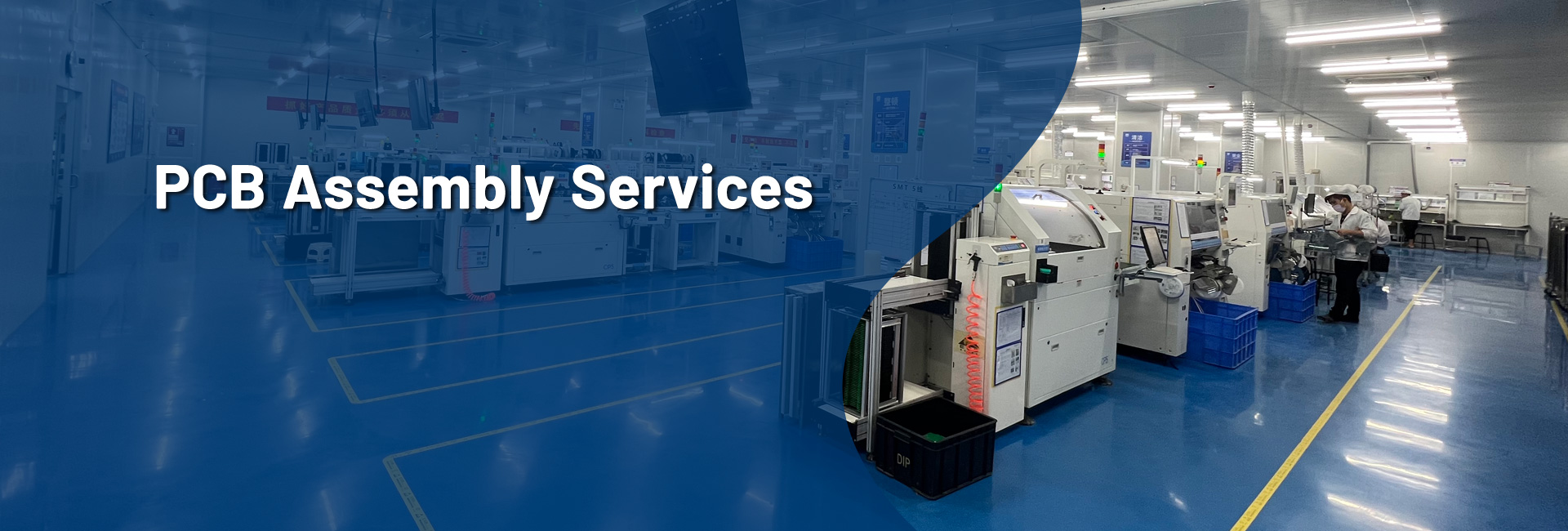
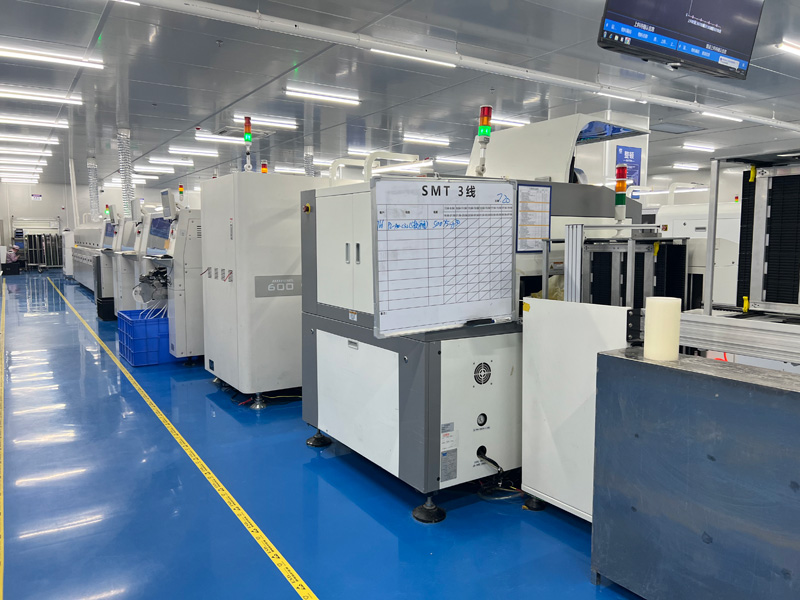
When it comes to high-quality industrial PCB assembly, Qixuan Shichuang Technology is your one-stop shop. With more than 13 years of experience fabricating and assembling a wide range of PCBs, QiXuan has earned the trust of clients across many industries. Backed by the latest technology, a team of specialists, and proven industry best practices, we build cutting-edge industrial PCBA that stays ahead of the curve.
We specialize in industrial PCB assemblies that demand high reliability and precision. Electronics for industrial applications must be extremely stable and able to perform in harsh conditions, so industrial boards are built to stringent standards. They must resist temperature extremes, moisture, dust, shock, vibration, and more.
QiXuan has over 10 years of experience bringing OEM ideas to life. We provide electronic assembly services to OEMs across the industrial and commercial sectors, and we understand the critical needs and challenges they face. Our experienced personnel can fulfill tailor-made requirements and deliver end-to-end service that meets challenges head-on. Using state-of-the-art equipment and advanced systems, we manufacture high-quality products and assure customers of flexible, on-time delivery.
We provide solutions for a wide range of industrial applications — from sensing systems and monitors to heavy equipment and household appliances. Our capabilities cover low-, medium-, and high-volume PCB assembly, box build assembly, cable and wire harness assembly, and complete turnkey assembly.
Depending on circuit complexity, we build anything from single-layer to multi-layer. for, flexible, or rigid-flex boards, and you can count on us to deliver customized PCBs tailored to your needs.
Rich Expertise – We have decades of experience in offering high quality industrial PCB assembly. You can bank on our team of experts to offer you the right selection of industrial PCB that suits your requirements. Besides having cutting edge technology, what we also have is access to industry best practices and therefore can recommend the right PCB to suit your needs.
Wide range of industrial PCB Assembly – Depending on your bespoke requirements, we offer a wide range of PCBs to choose from single, double layered to multi layered PCBs and more. We also offer rigid, flex and rigid flex PCBs that is most suitable for your industrial equipment. With Industrial PCB assembly needing a strong foundation, we offer a range of materials whose resilience and strength aids the PCB’s capability to support the intended application.
Suited for all volume requirements – We are well poised to support your volume requirements for industrial PCB assembly. Whether your need is for high or low volume industrial PCB assembly; you can bank on us to meet your needs.
Quick turnaround time – We take great pride in offering quality industrial PCB assembly with quick turnaround times. When you partner with us you can rest assured of sacrosanct timelines.
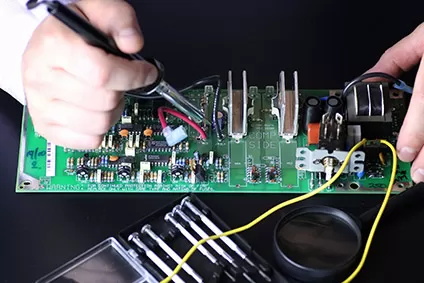
We undertake sourcing of original components. Given our extensive track record of dealing with component suppliers, our sourcing is easier, faster and helps you save on costs.
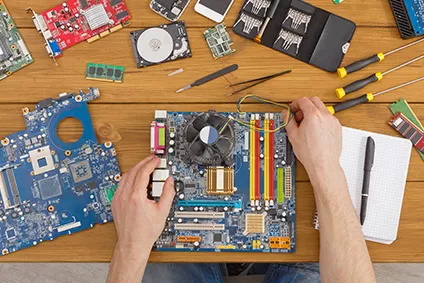
With our engineering abilities and expertise to design Industrial PCB prototypes, you can be sure of avoiding costly mistakes. Bank upon us to create custom industrial prototypes basis your exact needs with quick turnaround times.
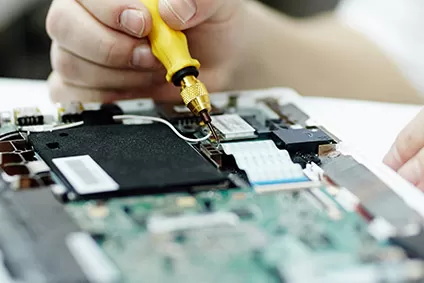
If you have had an industrial PCB that has been in use for several years and needs revision, you can count on our services. Not only we can help you with obsolete component sourcing but also reverse engineering your old Industrial PCBs
The Industrial PCB manufacturing process involves the following steps:
PCB Design and Layout – This is one of the most crucial stage of the entire manufacturing process. A successful design supports the functioning of the device hence due attention needs to be paid to this stage. PCB design, of course, is influenced by the exact requirements of the industrial application and the environment it needs to work under. It is also influenced by the nature of users as well as access to resources.
Prototyping – Having a functional PCB prototype in place, to a large extent, mitigates the probability of any costly errors at a later stage. The prototype can ensure that both the function and features are tested. It is worth spending more time and investment on prototypes, as once this is in place, you can proceed to assembly.
Industrial PCB Assembly – This is the stage where the necessary components are etched on the board as per the design. The steps in this process include:
Solder Paste Stenciling – This step involves application of solder paste to the board. The use of a stencil allows assemblers to apply solder paste only to certain parts of the PCB. With the use of an applicator solder paste is applied on the intended areas in precise amounts.
Pick and Place – Next, the pick and place machine places surface mount components on the PCBs. The components are then soldered to the surface of the board.
Reflow Soldering – This process involves moving the PCB board to a conveyor belt that moves through a large reflow oven. In turn, it melts the solder paste. The PCB next passes through coolers that allow the melted solder to solidify. This connects the surface mount components to the PCB. For two-sided PCB Assembly, the side with fewer and smaller parts is first stenciled, placed and reflowed, followed by the other side.
Inspection and Quality Control Once the surface mount components are soldered the assembled board needs to be tested for functionality. Common inspection methods include:
Manual Checks: These are particularly helpful for smaller batches where an in-person visual inspection can be carried out. This method, however, becomes impractical when the number of boards increase.
Optical Inspection: This method works well for large batches. An AOI machine uses a series of high-powered cameras to inspect the PCBs. Different quality solder connections reflect light in different ways allowing the AOI to detect a low-quality solder.
X-Ray Inspection: This method is used for complex or layered PCBs. It allows the viewer to see through layers to identify any potential problems.
Through-Hole Component Insertion – The board could also contain other components besides surface mount ones. A plated through-hole in this case is plated all the way through the board. Instead of soldering paste, a manual through-hole insertion is used. Wave soldering can also be undertaken where once the plated through hole component is put in place, the conveyor belt runs through a specialized oven where a wave of molten solder washes over.
Final Inspection and Functional Test – This step tests the PCB for its functionality. It simulates the circumstances in which the PCB will operate.
The broad difference between industrial and commercial PCB manufacturing process is as under:
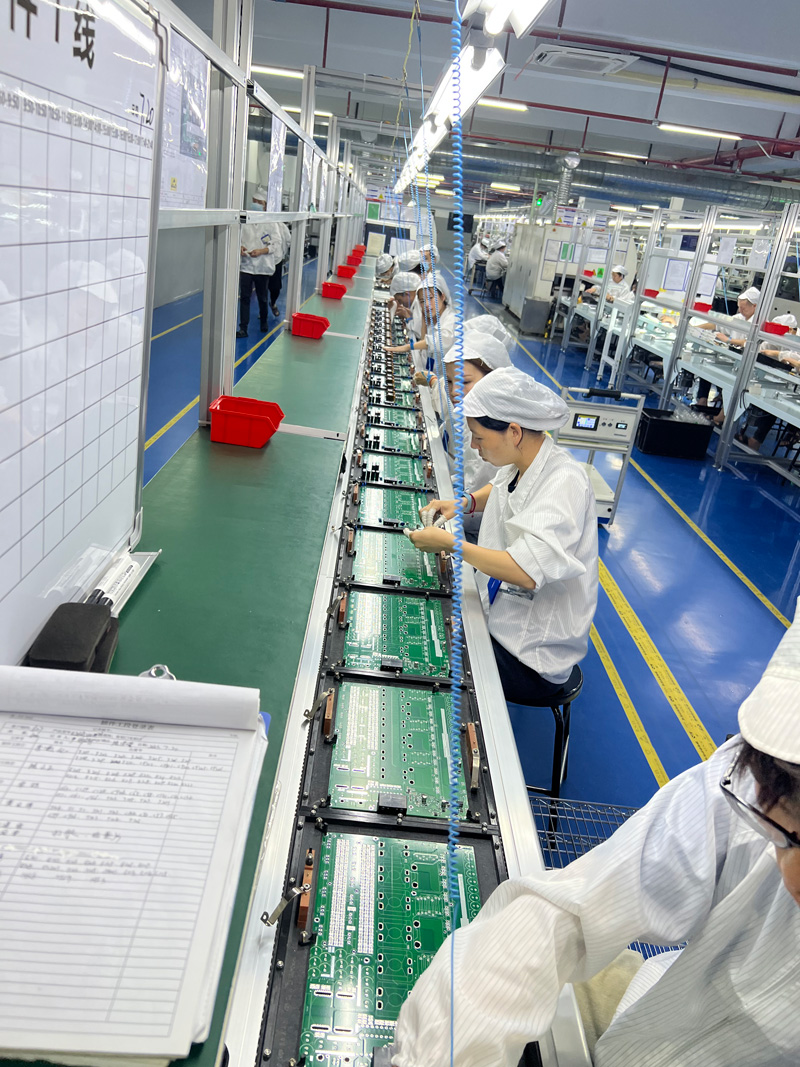
– 02
As their name suggests, Industrial PCB assembly find wide applications in a range of industries, including but not limited to: